

Septic Maintenance
How Often Should You Pump a Septic Tank in Warner Robins, GA?
Quick Answer: Most septic tanks in Warner Robins and Houston County, GA should be pumped every 3 to 5 years, according to the U.S. EPA. The exact interval depends on tank size, household size, water…
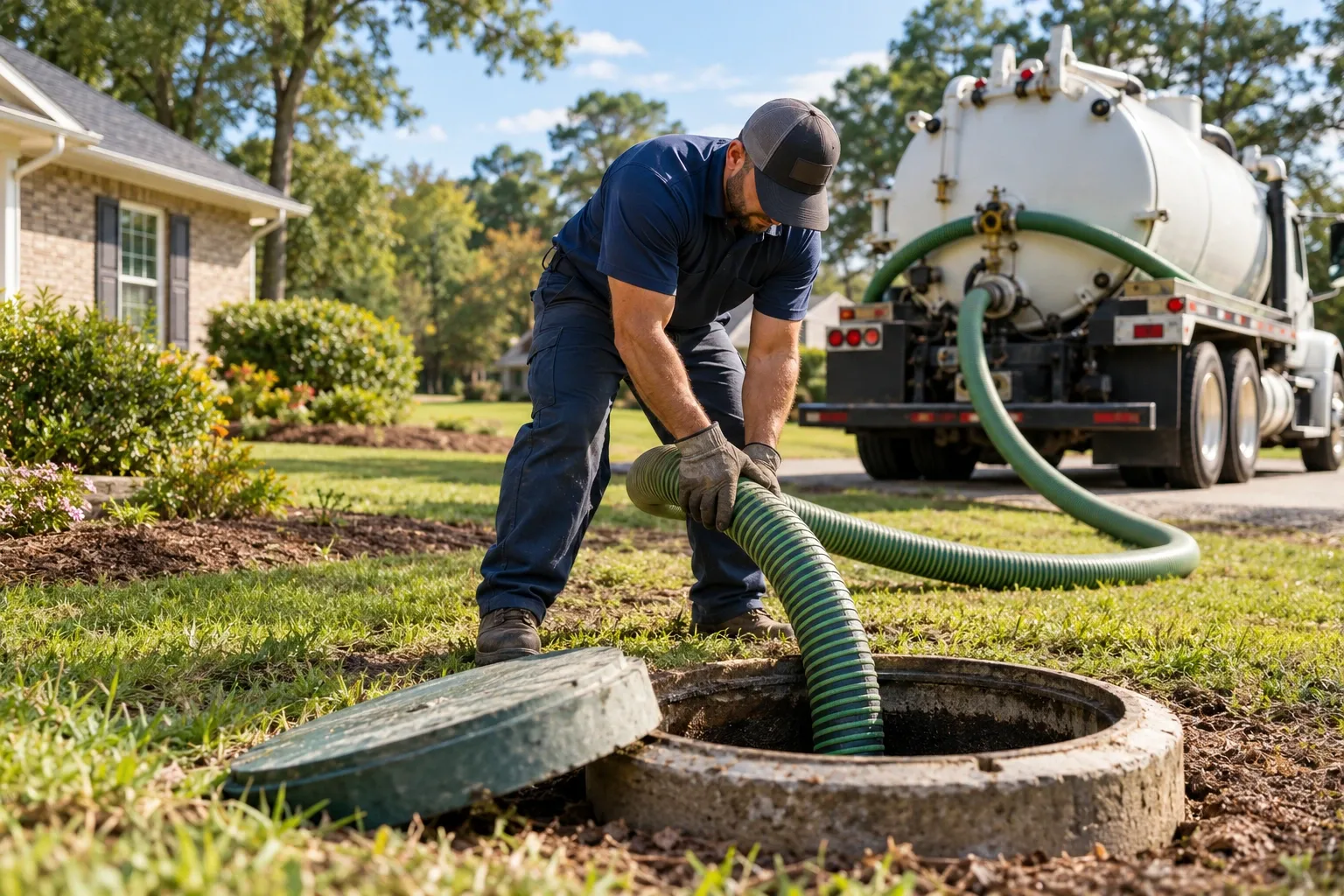
Quick Answer: Most septic tanks in Warner Robins and Houston County, GA should be pumped every 3 to 5 years, according to the U.S. EPA. The exact interval depends on tank size, household size, water use and how quickly solids accumulate. A 1,000-gallon tank serving four people may need pumping sooner than the five-year mark.
Three to five years is a useful starting point, but it is not a fixed schedule for every home.
A two-person household using a larger tank will usually accumulate waste more slowly than a family of five using a smaller system. Garbage disposal use, frequent guests, leaks, heavy laundry and previous maintenance can also shorten the interval.
For Warner Robins homeowners, the real goal is not to wait for a specific calendar date. It is to remove sludge and scum before too much solid material can move toward the drain field.
If your tank is approaching its normal service interval or you cannot remember the last pump-out, learn what is involved with septic tank pumping in Warner Robins.
Key Takeaways
Most household septic tanks are pumped about every 3 to 5 years.
Tank size and household size can significantly change that schedule.
Heavy water use and additional solids can make pumping necessary sooner.
Pump when scum is within 6 inches of the outlet or sludge is within 12 inches of the outlet.
Pump when sludge and scum together exceed about 25% of the tank's liquid depth.
Slow drains, gurgling, sewage odors, wet ground and backups deserve attention.
A septic tank filling with liquid after pumping is normally part of how the system operates.
Repeated problems after pumping can indicate something other than a full tank.
1. How Often Should You Pump a Septic Tank?
How often should you pump a septic tank? For many residential septic systems, every three to five years is the general maintenance range.
That does not mean every homeowner should automatically schedule pumping on the same date.
The right interval depends on several factors:
the size of your septic tank;
how many people live in the house;
how much wastewater the household produces;
how much solid waste enters the tank;
whether a garbage disposal is regularly used;
previous sludge and scum measurements; and
the property's maintenance history.
The condition inside the tank matters more than the calendar alone.
Pumping is generally recommended when the bottom of the scum layer gets close to the outlet, when the sludge layer rises too high, or when sludge and scum together occupy too much of the tank's working depth.
This is why keeping records from each service visit is useful. Over time, previous measurements can show how quickly your household accumulates solids.
If you recently purchased the property or nobody knows when the system was last checked, a septic inspection can provide a better starting point than guessing.
2. How Tank Size and Household Size Affect Pumping Frequency
Tank size and household size have a direct effect on how quickly a septic tank reaches the point where pumping should be considered.
A larger tank generally provides more capacity for accumulated solids. A larger household usually sends more wastewater and waste into the system.
A widely used pumping-frequency chart originating from earlier A.R. Jarrett/Penn State material illustrates that relationship.
Estimated Septic Pumping Intervals
| Tank Size | 2 People | 3 People | 4 People | 5 People | 6 People |
|---|---|---|---|---|---|
| 750 gallons | 4.2 years | 2.6 years | 1.8 years | 1.3 years | 1.0 year |
| 900 gallons | 5.2 years | 3.3 years | 2.3 years | 1.7 years | 1.3 years |
| 1,000 gallons | 5.9 years | 3.7 years | 2.6 years | 2.0 years | 1.5 years |
| 1,250 gallons | 7.5 years | 4.8 years | 3.4 years | 2.6 years | 2.0 years |
| 1,500 gallons | 9.1 years | 5.9 years | 4.2 years | 3.3 years | 2.6 years |
Estimated years between pumping for year-round homes. Source: pumping-frequency table from A.R. Jarrett's “Septic Tank Pumping” fact sheet, an earlier Penn State Extension edition, as reproduced by InspectApedia.
These numbers are estimates rather than deadlines. Actual sludge and scum levels should determine whether pumping is needed.
Family of 2, 3 or 4: 1,000-Gallon Tank Example
| Household | Estimated Interval |
|---|---|
| 2 people | 5.9 years |
| 3 people | 3.7 years |
| 4 people | 2.6 years |
The pattern is straightforward: as more people regularly use the same tank, the estimated pumping interval becomes shorter.
A household that grows from two people to four should therefore not assume its previous maintenance schedule will remain appropriate.
3. How Often Septic Tanks Need to Be Pumped: 7 Factors That Change Your Schedule
How often septic tanks need to be pumped depends on more than their age.
Household size, wastewater generated, solids generated and tank size are major factors. Day-to-day use and maintenance history can further affect the schedule.
| Factor | Why It Matters |
|---|---|
| 1. Household size | More residents normally create more wastewater and solids. |
| 2. Wastewater volume | Laundry, showers, leaking fixtures and other water use increase the load on the system. |
| 3. Solid waste volume | Faster sludge and scum buildup can shorten the pumping interval. |
| 4. Tank size | Smaller tanks have less capacity for accumulated solids. |
| 5. Garbage disposal use | Food waste adds more solid material to the tank. |
| 6. Guests or occupancy changes | More people using the home can suddenly increase wastewater flow. |
| 7. Maintenance history | Previous measurements help show how quickly your particular tank accumulates solids. |
Your schedule should change when the way the property is used changes.
A couple living alone, for example, should not necessarily follow the same schedule as a six-person household in a similar home.
4. Signs Your Septic Tank May Need Pumping Sooner
Even a well-planned maintenance schedule should not override obvious warning signs.
Signs your septic tank needs pumping may include:
Several drains becoming slow at the same time
Toilets or drains making gurgling sounds
Sewage odors inside or around the property
Wastewater backing up into tubs, showers or floor drains
Wet or soggy soil around the septic area
Unusually green grass over part of the septic system
A septic or pump alarm sounding
No known pumping record for several years
These symptoms do not automatically prove the tank is full.
A clogged pipe, damaged baffle, failed pump or struggling drain field can sometimes produce similar signs.
If sewage is already coming back into the home, reduce water use and follow the guidance for a full septic tank or backup.
If the problem returns soon after the tank has been pumped, the cause may require septic tank repair rather than another pump-out.
That distinction matters because pumping can solve an overfilled-tank problem, but it cannot repair a broken septic component.
5. What Happens If You Wait Too Long to Pump?
A septic tank naturally separates wastewater into different layers.
Heavier solids settle at the bottom and form sludge. Grease, oils and lighter materials rise and form a scum layer. Liquid wastewater remains between those layers and eventually travels toward the drain field.
The system depends on keeping accumulated solids inside the tank.
As sludge and scum build up, there is less effective space inside the tank. If solids accumulate for too long, they can begin leaving the tank with wastewater.
Once excessive solids reach the drain field, the situation can become more serious because the soil is designed to receive liquid effluent, not large amounts of sludge.
Routine pumping therefore serves a preventive purpose. It removes accumulated material before the system reaches the point where solids may begin affecting downstream components.
Waiting for an indoor sewage backup before scheduling maintenance is rarely the best approach.
6. Heavy Rain and Septic Systems in Warner Robins
Weather can also affect how a septic system behaves.
After prolonged or heavy rain, soil around a drain field may become saturated. Saturated soil cannot accept wastewater as efficiently as normally drained soil.
That may result in:
slower drains;
unusually high wastewater levels;
wet areas above the drain field;
sewage odors outdoors; or
an increased risk of backup.
Rainwater or groundwater can also enter a septic system through damaged components or poorly sealed access points.
If symptoms appear only during extremely wet weather, avoid automatically assuming the tank simply needs to be pumped.
Reduce unnecessary household water use and allow saturated soil time to recover.
If wet ground, sewage odors or slow drainage continue after conditions improve, review the signs of possible drain field problems.
Homeowners in Warner Robins and nearby communities can also confirm local coverage through our septic service areas page.
7. Why Is My Septic Tank Full Again After Pumping?
Homeowners sometimes look into a septic tank shortly after pumping and become concerned because it appears to be full of liquid again.
In many cases, this is normal.
A conventional septic tank is designed to operate with wastewater inside it. After pumping, normal household water use gradually refills the tank to its operating level.
Once that level is reached, incoming wastewater pushes approximately the same amount of liquid effluent toward the drain field.
So the presence of liquid does not tell you whether the tank needs pumping again.
The more important questions are:
Are toilets or drains backing up?
Is wastewater leaving the tank properly?
Did the original symptoms disappear after pumping?
Are unusually high water levels present?
Are outdoor wet spots or sewage odors developing?
Did the problem return almost immediately?
A recently pumped tank that is operating normally is very different from a recently pumped system that still has slow drains or backups.
Recurring symptoms suggest the system should be evaluated rather than simply pumped again.
8. Does a Garbage Disposal Mean More Frequent Pumping?
Often, yes.
A garbage disposal breaks food into smaller pieces, but those solids do not disappear. They enter the septic tank with household wastewater.
Additional food waste can increase the amount of sludge and scum the tank has to retain.
Homeowners who regularly use a garbage disposal should therefore pay more attention to maintenance records and measured sludge levels instead of assuming that a five-year interval will always work.
You can also reduce unnecessary solids entering the tank by keeping these materials out of drains and toilets:
cooking grease and oils;
paper towels;
wipes, including many labeled “flushable”;
coffee grounds;
feminine hygiene products;
household trash; and
excessive food waste.
Water conservation also helps by reducing unnecessary hydraulic load on the septic system.
9. Septic Pumping, Cleaning and Inspection Are Not the Same Thing
These services are related, but they solve different needs.
| Service | Purpose |
|---|---|
| Pumping | Removes wastewater, sludge and scum from the tank using vacuum equipment. |
| Cleaning | Provides more thorough removal when compacted sludge or buildup remains after normal pumping. |
| Inspection | Checks accessible septic components and system conditions to identify maintenance needs or possible problems. |
Routine pumping is primarily about removing accumulated waste.
Cleaning may be appropriate when material has become difficult to remove through an ordinary pump-out. Learn more about when septic tank cleaning may be recommended.
An inspection serves another purpose: understanding the condition of accessible parts of the system, particularly when the maintenance history is unknown or a problem keeps returning.
Choosing the correct service helps prevent homeowners from repeatedly paying for pump-outs when the underlying issue may be somewhere else.
10. Keep a Simple Septic Maintenance Record
Keeping a basic septic service record can make future maintenance decisions much easier.
Instead of relying only on a general three-to-five-year guideline, save the details from each service visit so you can see how quickly your own system accumulates sludge and scum.
| What to Record | What to Save |
|---|---|
| Service date | The date the tank was pumped, cleaned, inspected or repaired |
| Service performed | Pumping, cleaning, inspection or repair work completed |
| Tank size | Tank capacity, if known |
| Sludge and scum levels | Measurements provided during service |
| Problems found | Cracks, damaged baffles, high liquid levels, blockages or other concerns |
| Repairs completed | Any components repaired or replaced |
| Household conditions | Number of occupants or major changes in water use |
| Next recommended check | Suggested date for the next inspection or pump-out |
Keep these records with your property documents.
Over time, they can help show whether your tank typically needs attention closer to three years, five years, or another interval based on actual system conditions.
Good maintenance records are also useful when:
you purchase a home with an existing septic system;
household size changes;
the property is rented to new occupants;
recurring septic symptoms develop; or
the home is later sold.
The most useful information is not simply when the tank was pumped, but what the technician found during the visit.
Sludge and scum measurements, repairs, unusual water levels and recurring symptoms can help create a more accurate maintenance history for the property.
Frequently Asked Questions
How often should you pump a septic tank with four people in the house?
For most household systems, three to five years is the general starting range. However, the Penn State/Jarrett pumping chart estimates about 2.6 years for four people using a 1,000-gallon tank. Actual pumping need depends on the amount of sludge and scum inside the tank, so measurements and maintenance history are more useful than relying on the chart alone.
How often should you pump a 1,000-gallon septic tank?
Household size makes a major difference. The Penn State/Jarrett chart estimates approximately 5.9 years for two people, 3.7 years for three people, 2.6 years for four people and 2 years for five people in a year-round residence.
These figures are estimates rather than mandatory pumping dates.
Does a garbage disposal make a septic tank need pumping more often?
It can.
Food waste from a garbage disposal adds solids to the septic tank, which can increase sludge and scum accumulation. Homes that use a disposal frequently may need their actual tank conditions checked sooner than homes that send less solid material into the system.
What happens if I don't pump my septic tank?
Sludge and scum continue accumulating.
If the layers become excessive, solid material can begin leaving the tank with wastewater and may contribute to problems farther into the septic system.
Is a septic tank supposed to look full after it was pumped?
Yes.
A septic tank normally refills with wastewater until it reaches its working liquid level. Seeing liquid inside a recently pumped tank does not by itself mean it needs to be pumped again.
Can heavy rain cause septic problems?
Yes.
Prolonged rain can saturate the soil around a drain field and temporarily reduce how efficiently wastewater can soak into the ground.
Slow drains, wet soil or backups during very wet conditions should be watched carefully, especially if they continue after the soil has had time to drain.
How do I know whether I need septic pumping or cleaning?
Pumping removes wastewater, sludge and scum from the tank.
Cleaning generally involves additional work when compacted sludge or buildup remains. The actual condition of the tank determines which service is appropriate.
Plan Your Next Septic Pump-Out Before Problems Start
For most Warner Robins homeowners, the three-to-five-year range is a practical starting point.
But your tank size, household size, wastewater use, garbage disposal habits and actual sludge accumulation should ultimately determine the schedule.
Pumping a septic tank on time helps keep accumulated solids inside the tank instead of allowing them to move farther into the system.
If you cannot remember when your tank was last pumped, recently purchased the property, or are already noticing several slow drains, odors, gurgling or backups, having the system checked is more useful than guessing.
Keep the measurements and service date afterward. Those records will make your next maintenance decision easier.
For local septic help in Warner Robins and nearby Houston County, request septic service or call (478) 500-8209.
Warner Robins Septic Pumping
789 SR 96
Bonaire, GA 31005
Phone: (478) 500-8209
Author
Warner Robins Septic Pumping Editorial Team
This guide helps homeowners and property managers in Warner Robins and nearby Houston County understand routine septic maintenance, pumping frequency and warning signs that may require professional evaluation.